By Daniel R. · Updated 2026-08-12 · 14 min read
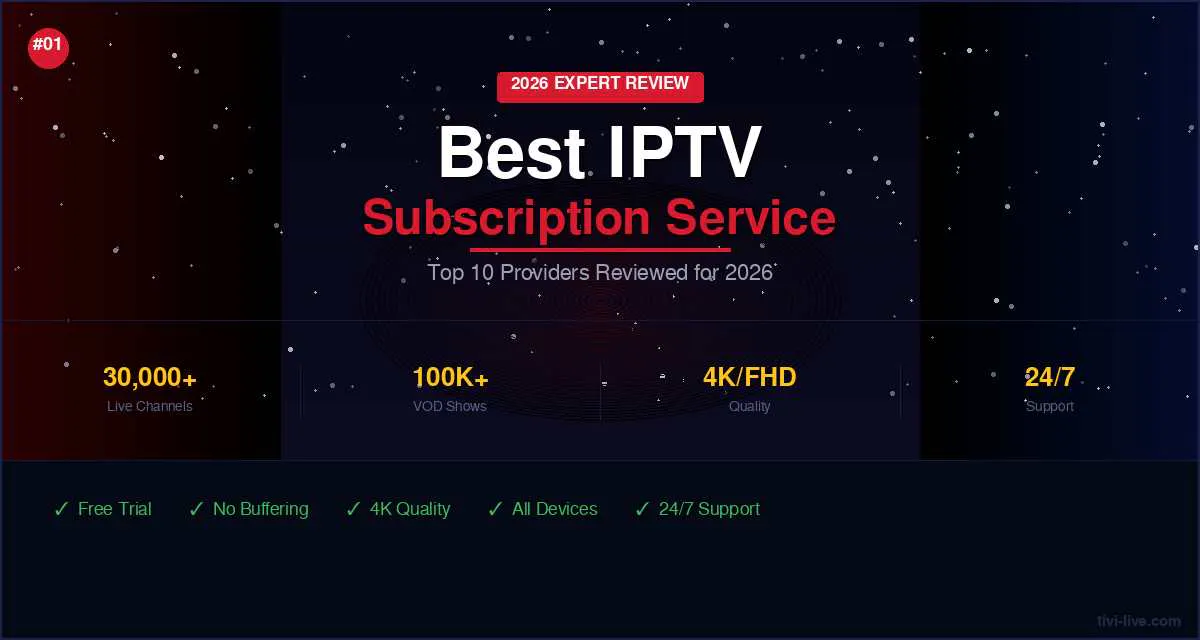
The image above shows the basic path of IPTV: a broadcaster or server sends video and audio as data packets through the internet to your home router, then to your TV box, Firestick, or smart TV app. Your IPTV app reassembles those packets into a live TV channel. Because the video comes as data rather than a fixed cable signal, IPTV can also deliver interactive features like catch-up TV, an electronic program guide, and multi-device viewing.
This quick-start guide walks through the exact steps to get IPTV running without wasting money on the wrong box, a slow server, or confusing settings. The goal is practical: after reading this, you’ll be able to set up IPTV, verify it, understand how it works on a smart TV or Firestick, and fix the most common playback problems.
What You Will Accomplish by the End
By the end of this article, you will have a clear mental model of how IPTV works and a working setup on your own screen. More specifically, you will:
- Understand the difference between IPTV, cable TV, and regular streaming apps.
- Know which device to use, including how to set up IPTV on Firestick and Android TVs.
- Learn what to check before buying a subscription, especially if you want the best IPTV service for live sports.
- Get a simple IPTV buffering fix guide that works during live matches.
- Be able to verify whether your provider is reliable and whether your setup is legally and technically sound.
What You Need Before Starting
You don’t need a satellite dish or a cable contract. You do need a few items that make the setup smooth from the first minute.
- A compatible device: Smart TV, Firestick, Android TV box, Apple TV, phone, or tablet. Many IPTV apps work on all of them.
- A stable internet connection: Aim for at least 25 Mbps for HD quality, and use Ethernet if possible. Live sports and 4K streams are more sensitive to jitter than download speed alone.
- A provider account or trial: This gives you either an M3U playlist URL, an Xtream Codes portal address, or an activation code.
- An IPTV player app: Popular options include IPTV Smarters Pro, TiviMate, Televizo, and the provider’s own app.
Once you have these, you can follow the rest of the guide in about 15 minutes. The actual setup is not more difficult than installing a streaming app, but the details matter.
Step 1: Understand What IPTV Really Is
IPTV stands for Internet Protocol Television. Instead of receiving channels through a coaxial cable line or a satellite dish, your TV gets encoded video in small network packets. These packets travel over the internet to your home router, and your IPTV player app decodes them in real time.
The technology is the same family as YouTube and Netflix, but with a few differences. IPTV is usually optimized for live linear channels. That means it has to keep a continuous stream moving without long buffering periods. This is why “how does IPTV work” is really a question about bandwidth, source quality, and the app’s ability to reassemble packets.
What to Watch For in This Step
Look at how the provider explains its service. If they mention “M3U,” “Xtream Codes,” “portal URL,” or “MAC address,” they are using standard IPTV delivery methods. A reputable setup should give you clear instructions instead of asking you to install a random APK from a private Telegram channel.
Also remember that IPTV is not automatically the same as illegal piracy. Services like YouTube TV, Hulu + Live TV, and Fubo also use internet-delivered video. The key factor is whether the provider holds the rights to the channels it resells.
Step 2: Choose Where to Watch: Smart TV, Firestick, or Set-Top Box
The best entry point depends on what you already own. If your TV runs Android TV, webOS, or Tizen, you can install an IPTV player directly. This is what people usually mean when they search for “how does IPTV work on smart TV.” The TV connects to the same internet as your phone, opens the player, loads the playlist, and displays the stream.
For Amazon devices, the process is slightly different. To set up IPTV on Firestick, you often need to sideload an app using the Downloader app because some IPTV players are not available in the Amazon Appstore. That sounds technical, but it is just a few clicks:
- Enable “Apps from Unknown Sources” in the Firestick settings.
- Install Downloader from the Amazon Appstore.
- Type the official URL provided by your IPTV service.
- Open the installed app and enter your M3U or Xtream credentials.
Common Mistakes in This Step
Mistake 1: Buying a cheap set-top box that already has dozens of IPTV apps pre-installed. Those boxes often run old Android versions, have weak Wi-Fi chips, and can contain modified apps. You are better off using a standard Firestick or a reliable Android TV box.
Mistake 2: Choosing the device before checking provider compatibility. Some IPTV providers only issue activation codes for specific apps, while others provide a generic M3U line that works anywhere. Confirm compatibility before you pay.
Mistake 3: Assuming Wi-Fi is fine. Smart TVs in particular have weak network cards. If the TV is far from your router, the picture will freeze even though your broadband speed is high. Use a wired Ethernet connection or a powerline adapter where possible.
Step 3: Pick a Reliable Provider and Understand the Legal Side
The quality of IPTV depends heavily on the provider’s servers, channel sources, and support. When people ask for the best IPTV service for live sports, they usually need the following:
- Stable 50 or 60 frames per second sports channels.
- Multiple connections if they want to watch on two screens at once.
- A functional electronic program guide so they can find games quickly.
- A trial period or short subscription before committing.
Regarding legality, IPTV itself is not illegal in the US. The technology is neutral. What matters is whether the person or company supplying the streams has the right to distribute that content. If someone offers every American premium channel for a few dollars per month, that is a strong sign the service is unauthorized. Legitimate IPTV providers are transparent about licensing and usually operate in countries where they own those rights.
If you are asking “where to buy reliable IPTV subscription,” the safest answer is to buy from the official website of a provider with a real support team. Avoid sellers who message you directly on Telegram, Reddit, or Instagram with one-time payment links. They tend to disappear quickly.
IPTV vs Cable: Which Is Better?
The answer depends on your internet connection and viewing habits. The table below gives a quick comparison for most households.
For many people, IPTV is better because it gives more channel options on more screens at a lower price. But cable wins when your internet connection cannot handle live video. If you have consistent fiber or cable broadband, IPTV is worth testing.
Pros and Cons of IPTV
✓ Benefits & Pros
Works on multiple devices with one subscription.
No long-term cable contract required.
Usually includes live sports, international channels, and replay features.
Easy to switch apps and providers without changing hardware.
✗ Limitations & Cons
Quality depends on the provider’s server and your internet speed.
Some subscriptions operate in a legal gray area.
Apps can stop working after provider updates.
Buffering and freezing can happen during peak hours.
RECOMMENDED RESOURCE
how does iptv work
Compare premium line configurations and promotional limits.
Check Out how does iptv work Deals →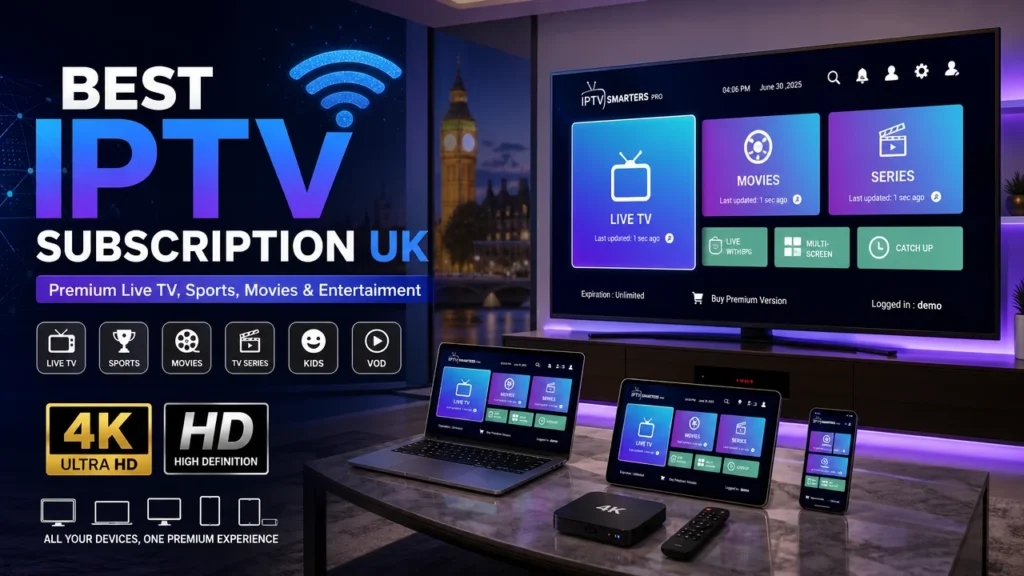
Look at the layout above: it doesn’t matter whether you use a smart TV, phone, or Firestick. The internet connection is the common thread. That is why fixing Wi-Fi or upgrading your router often improves IPTV more than changing providers.
Step 4: Set Up IPTV and Verify Everything Works
Once you have a provider and an app, the setup is usually the same. Open your IPTV player, choose “Add New User,” and select the login method your provider sent. You will typically enter one of the following:
- M3U URL: a direct link to the channel playlist.
- Xtream Codes: a portal address, username, and password.
- Activation code: a short code used in the provider’s custom app.
After the app loads the playlist, you should see categories like Sports, News, Documentaries, and Kids. Open a channel and let it run for two or three minutes. Then switch channels to confirm that the playlist is working.
Finalization and Verification
Verification is more than just seeing one channel. Check the electronic program guide to see if schedule data loads correctly. Test a live sports channel during a real game, not just in the afternoon. If you have a second TV or phone, try using your subscription on two devices to make sure the connection count is correct.
Finally, restart your streaming device. This may sound simple, but IPTV apps occasionally cache bad connection state and need a clean reboot. If the app still opens to an empty channel list, re-enter your M3U or Xtream login and check whether the provider has an active server status page.
Troubleshooting: If Something Goes Wrong
Most IPTV problems are not caused by the app itself. They come from the network, the provider’s source, or wrong player settings. Use this IPTV buffering fix guide before contacting support.
- Run a speed test on the same device. If the Firestick or TV reads 8 Mbps while your phone shows 50 Mbps, the problem is local Wi-Fi, not the provider.
- Switch to Ethernet. Even a cheap Ethernet adapter for Firestick can eliminate jitter and packet loss.
- Change the decoder in the app. Try hardware decoding first, then software decoding. Some smart TVs handle one better than the other.
- Increase the buffer size. If the app lets you set a buffer of 1 to 5 seconds, use a higher value for live sports.
- Update the IPTV app. Old versions often break when providers change their server software.
- Wait and retry. Some freezes are on the provider’s side. If the channel returns after 20 seconds, the source may be overloaded.
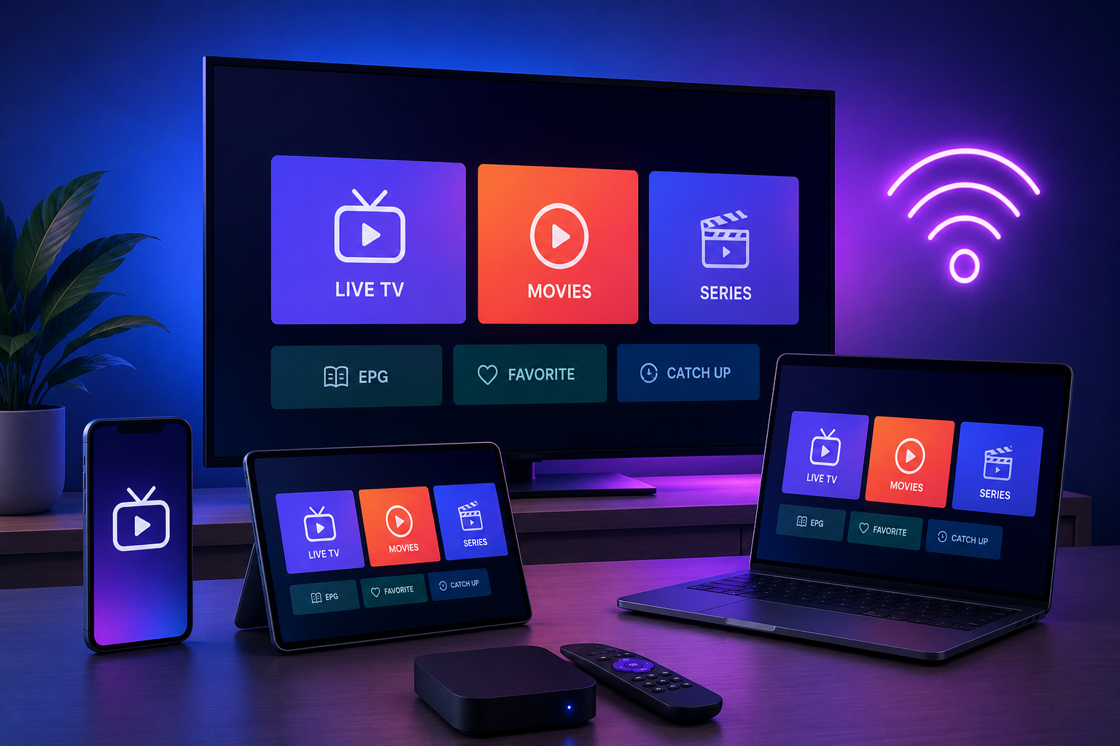
The network diagram above is the setup I recommend for anyone who wants reliable live TV. It keeps the streaming box close to the router and avoids wireless interference. Once you do that, half of the usual buffering complaints disappear.
Summary Table: All Steps at a Glance
Final Thoughts and Recommendation
IPTV is not complicated once you understand that live TV is just another internet stream. The fastest path is to pick a good device, subscribe to a provider that allows a trial, load the playlist into a standard player app, and test the service during peak hours. If you already have a Firestick or Android TV box, the only real purchase is the subscription itself.
Start with the features that matter to you. If live sports are your priority, ask the provider for current sports channels in 50 or 60 fps. If you watch from multiple rooms, confirm the subscription allows more than one connection. A good provider will answer those questions before you pay.
Featured Streaming Selection:
See how does iptv work Pricing →Affiliate Disclosure: Clicking this secure link verified by our network supports our team through standard partnership terms at zero extra cost to your invoice.
Frequently Asked Questions
This article contains affiliate links. Our editorial analysis remains independent.